Brexit warning as EU country says it will do everything it can to get UK back in . hyn

Nigel Farage has said he is ready to “fight” Mr Burnham in an effort to stay outside of the bloc.

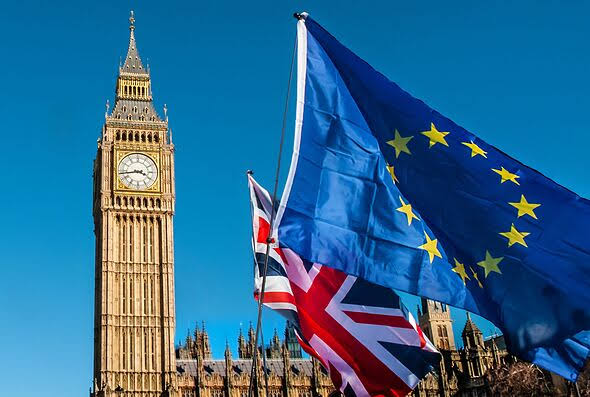
A European country has vowed to support the UK if it rejoins the EU (Image: Getty)
Germany has vowed to do everything in its power to help Britain if it decides to rejoin the EU, after the Prime Minister, Andy Burnham, said a second Brexit referendum was a possibility. He said an in-out referendum may feature in future Labour manifestos, while ruling out any immediate action.
He also pledged in his Labour conference speech on Tuesday to explore closer ties with the bloc at a summit later this year. Susanne Baumann, the German ambassador to the UK, said Germany would always serve as a “partner”, and she was happy to hear the Prime Minister’s comments.

Andy Burnham said a future referendum could be a possibility (Image: Getty)
She told The Telegraph: “For us Germans, the UK is an integral part of Europe – its history, its present and its future. I was therefore glad to hear the Prime Minister speak about different options for the UK’s relationship with Europe.
“It is, of course, for the British people to decide how close they want that relationship to be. But let me be clear: in Germany you will always find a partner for setting the ambition as high as we can.”
Mr Burnham’s divisive comments were met with mixed reactions. Nigel Farage, the leader of Reform UK, said he was ready to “fight” Mr Burnham in an effort to stay outside of the EU.
It could prove to be a major sticking point in the next election, with the Conservatives also critical. The party accused Mr Burnham of trying to “reopen old wounds by restarting the battles of the Brexit years”.

Emmanuel Macron would also support Britain rejoining the EU (Image: Getty)
In an interview with the BBC on Wednesday, the Prime Minister said options could include staying “exactly as we are”, a closer relationship with the EU, or rejoining the EU customs union.
However, he stressed that “to leap back to a proposal and a referendum on it wouldn’t be the right thing to do right now”. When questioned over future possibilities, he said: “Yes, things are possible. I think where we are isn’t good enough.”
Some European nations also welcomed the suggestion of a Brexit reversal. French President Emmanuel Macron said that rejoining would be “very good news” for the UK and for Europeans, in Madrid on Wednesday. “Welcome back,” he said.
Spanish Prime Minister Pedro Sanchez said if Britain does try to rejoin the EU, “then of course Spain would applaud it and open its arms again to a brotherly people”.
Brexit Warning as EU Country Says It Will Do Everything It Can to Get UK Back In
Britain’s decision to leave the European Union continues to cast a long shadow over the country’s political debate, with a fresh warning emerging from Europe that the door to renewed UK membership may never be fully closed. An EU country has indicated that it would do everything within its power to encourage Britain to return to the European project, reigniting one of the most sensitive arguments surrounding Brexit.
The intervention is significant because the question of Britain’s long-term relationship with the European Union has increasingly moved back into the political mainstream. For years after the 2016 referendum, the debate was dominated by arguments over the mechanics of withdrawal, trade arrangements and the Northern Ireland settlement. Today, however, attention is increasingly turning towards what the relationship could look like over the next decade.
The latest comments from Europe will inevitably alarm some Brexit supporters, who fear that Britain could gradually be pulled back towards the EU without formally reversing Brexit. Others will see the remarks as evidence that European countries recognise the continuing importance of Britain and would welcome closer cooperation.
The divide illustrates how unresolved the Brexit question remains.
Europe still wants Britain close
Although the United Kingdom formally left the European Union in 2020, Britain remains one of Europe’s most important economic, military and diplomatic powers. It is a major trading nation, a permanent member of the United Nations Security Council and a leading contributor to European security.
That means the EU has a strong interest in maintaining a close relationship with London.
For some European politicians, however, cooperation is not enough. They believe Britain’s departure weakened both sides and that a future return to the EU could eventually become possible.
Such a prospect remains politically distant, but the willingness of an EU country to publicly advocate Britain’s eventual return is important. It demonstrates that Brexit is not necessarily regarded across Europe as a permanent settlement that can never be reconsidered.
Instead, some European leaders appear to believe that political circumstances can change.
That argument could become increasingly influential if British public opinion continues to evolve.
The political landscape has changed
When the Brexit referendum took place in 2016, the political atmosphere was very different. The Leave campaign won with a promise to restore national sovereignty, regain control over immigration and free Britain from what supporters described as excessive European interference.
Since then, Britain has experienced major political upheaval.
The country has had several prime ministers, a change of government and intense debates over immigration, economic growth, public services and the cost of living. At the same time, Brexit has remained one of the most divisive political issues in Britain.
Supporters of leaving the EU argue that Brexit gave Britain the freedom to make its own laws and negotiate independent trade agreements. They insist that the country should use those freedoms more aggressively rather than discussing a return to European institutions.
Remain supporters, by contrast, argue that Brexit has created economic and diplomatic difficulties that could have been avoided.
The latest European intervention therefore lands at a particularly sensitive moment.
A return would not be simple
Even if Britain eventually decided that it wanted to rejoin the European Union, the process would be extraordinarily complicated.
A future British government could not simply announce that the country was returning to the position it occupied before 2020. EU membership would require negotiations, agreement among existing member states and compliance with the rules governing accession.
Britain would also have to consider questions surrounding the single market, customs arrangements, freedom of movement and the euro.
There would be no guarantee that the UK would receive exactly the same terms it enjoyed before Brexit.
That is one reason why the prospect of rejoining the EU remains controversial even among people who now regret Brexit.
Some might favour closer cooperation without accepting full membership. Others could support membership only if Britain received special arrangements. Still others would argue that rejoining would undermine the democratic decision made by voters in 2016.
The debate is therefore far more complicated than simply asking whether Britain should be “in” or “out”.
Brexit supporters issue a warning
For Brexit supporters, the latest European remarks could be interpreted as a warning about the direction of British politics.
They fear that political leaders who promise closer relations with the EU could gradually dismantle the practical consequences of Brexit without openly seeking to reverse the referendum.
From this perspective, agreements covering trade, migration, security and regulatory cooperation could eventually bring Britain closer to the EU than voters who supported Leave intended.
This concern is particularly strong among politicians who believe Brexit has not yet been fully implemented.
They argue that Britain should take advantage of its ability to set its own regulations, control immigration and negotiate agreements independently.
For them, talk of eventually returning to the EU is not an attractive vision of European cooperation. It represents a potential loss of the sovereignty that Brexit was designed to restore.
But Brexit critics see an opportunity
Critics of Brexit interpret the same development very differently.
They argue that Europe’s willingness to welcome Britain back demonstrates that the EU does not regard the British people as permanently excluded from the European project.
If Britain eventually decided that membership was in its national interest, they believe European countries would be willing to discuss the possibility.
This argument could become more powerful if younger generations, who were more likely to support Remain in 2016, become a larger part of the electorate.
Public opinion is not fixed. Political priorities change, economic circumstances evolve and generations replace one another.
The question is therefore not necessarily whether Britain will rejoin the EU tomorrow, but whether the idea could become politically realistic many years from now.
The economy remains central
Ultimately, much of the debate will depend on Britain’s economic performance.
If the UK manages to deliver strong economic growth, expand international trade and use its post-Brexit freedoms effectively, arguments for remaining outside the EU will be strengthened.
If economic difficulties persist, however, critics could argue that closer integration with European markets would provide significant advantages.
Trade is especially important because the European Union remains Britain’s largest nearby economic bloc.
Businesses have repeatedly had to adapt to new customs procedures and regulatory requirements since Brexit. Supporters of closer European relations argue that reducing these barriers could benefit exporters and consumers.
Brexit supporters counter that Britain should look beyond Europe and develop stronger relationships with economies around the world.
The success or failure of that strategy could have a major influence on future political arguments.
Immigration will remain another battleground
Immigration is perhaps even more politically sensitive.
One of the strongest arguments made by the Leave campaign was that Britain needed greater control over its borders. Brexit ended the UK’s participation in EU free movement rules, allowing British governments to introduce a new immigration system.
However, immigration has remained a major political issue.
High levels of legal migration, asylum applications and Channel crossings have continued to fuel public concern. Political parties across the spectrum have therefore been forced to debate how Britain should control its borders.
A return to the EU would inevitably raise questions about whether freedom of movement could return in some form.
That prospect would be fiercely contested by Brexit supporters.
Any British government proposing EU membership would therefore face the challenge of convincing voters that the economic and political benefits outweighed the consequences for immigration policy.
Europe may have to wait
Despite the enthusiasm expressed by some European politicians, Britain returning to the EU remains far from imminent.
British politics is still deeply divided over Brexit, and there is little appetite among many voters for reopening the entire constitutional argument.
A government seeking to reverse Brexit would likely face intense opposition from parties and campaign groups determined to defend the 2016 result.
There is also a practical question of timing.
Britain may prefer to pursue a gradual process of rebuilding relations with Europe rather than immediately seeking membership. Cooperation on defence, trade, research, energy and security could provide a middle ground.
Such an approach could allow Britain and the EU to become closer without immediately reopening the most contentious issues.
A debate that will not disappear
The most important message from the latest European intervention may therefore be that Brexit is not necessarily the final chapter in Britain’s relationship with Europe.
The referendum settled the immediate question of membership, but it did not determine what Britain’s relationship with its neighbours would look like for generations.
Politics rarely stands still.
A future generation of British voters may view the European Union differently from those who voted in 2016. Equally, future voters may decide that Brexit delivered important benefits and that Britain should remain outside the bloc permanently.
For now, both possibilities remain open.
The European country’s declaration that it will do everything it can to encourage Britain back into the EU is therefore less a prediction of an imminent return than a reminder that the door to Europe may remain politically open.
For Brexit supporters, that is a warning that the battle over Britain’s relationship with the EU is not over.
For Brexit critics, it is an invitation to imagine a different future.
And for British politicians, it presents a difficult strategic choice: whether to defend the current Brexit settlement, seek a closer partnership with Europe, or eventually consider the much more dramatic question of membership once again.
Whatever happens, one conclusion appears increasingly difficult to avoid. Brexit may have changed Britain’s relationship with Europe, but it has not ended the argument about where Britain ultimately belongs.