
-
Vlsew
- Blog
- 0 Comments
For many people, nighttime is strangely emotional. The day finally becomes quiet, distractions disappear, and suddenly the mind starts replaying everything it avoided thinking about earlier. Random memories return. Future worries become louder. Small regrets feel bigger. Conversations replay repeatedly for no reason.
That’s why so many people search for answers about why people overthink so much before sleeping. Almost everyone has experienced nights where the body feels exhausted, but the brain refuses to slow down.
And honestly, the strange part is that overthinking often becomes strongest exactly when people want peace the most.
The room gets quieter. The world slows down. But the mind becomes louder.
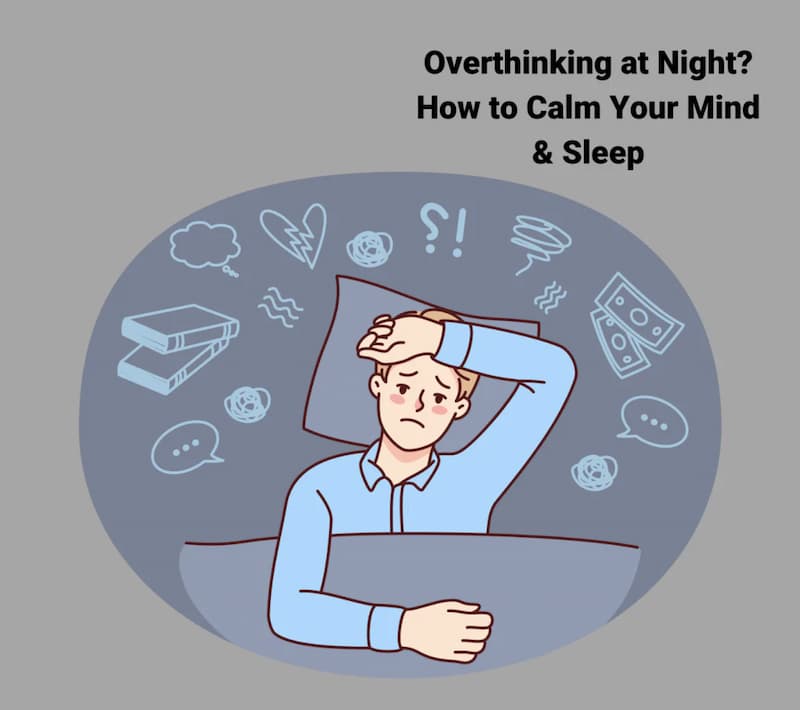
Why People Overthink So Much Before Sleeping Happens at Night Specifically
One major reason why people overthink so much before sleeping feels so common is because daytime distractions temporarily protect people from their deeper thoughts.
During the day, the brain stays busy with: work, notifications, social media, conversations, responsibilities, noise, and constant stimulation. There is always something demanding attention.
But at night, most distractions disappear. Silence creates mental space, and suddenly unresolved thoughts rise to the surface because the brain finally has room to process them.
That’s why people often think about things at night they barely noticed during the day.
The mind was distracted before. Now it finally catches up emotionally.
The Brain Does Not Like Unfinished Emotional Tension
Human brains naturally revisit unresolved emotions.
- Arguments that never felt fully resolved.
- Embarrassing moments.
- Stress about the future.
- Uncertainty.
- Fear.
- Loneliness.
- Things left unsaid.
At night, the brain often starts processing unfinished emotional experiences because there are fewer external distractions competing for attention.
That’s why overthinking before sleep often feels emotionally repetitive. The mind keeps circling the same thoughts searching for emotional closure, certainty, or control.
And honestly, humans rarely tolerate uncertainty well psychologically.
The brain would rather obsess over problems than sit comfortably with unanswered feelings.
Nighttime Makes Emotions Feel Bigger
One strange thing about human psychology is that emotions often feel more intense late at night.
Problems that seemed manageable during the day suddenly feel overwhelming after midnight. Small worries grow emotionally heavier. Loneliness feels deeper. Regret feels sharper.
Part of this happens because exhaustion weakens emotional regulation.
When people are mentally tired, the brain becomes less effective at calming anxiety and rationalizing stress logically. Emotional thoughts feel more convincing and harder to ignore.
That’s why nighttime overthinking can feel emotionally dramatic even when nothing externally changes.
The mind simply becomes more emotionally vulnerable when exhausted.

Why People Overthink So Much Before Sleeping in Modern Life
Another reason why people overthink so much before sleeping feels increasingly common today is because modern life overstimulates the brain constantly.
People spend entire days absorbing endless information: short videos, news, messages, notifications, stress, work pressure, social comparison, and nonstop digital input.
The brain rarely gets moments of genuine quiet anymore. Then suddenly at night, stimulation stops.
And all the emotional noise that was temporarily buried underneath starts surfacing at once.
In many ways, nighttime overthinking is the brain trying to process emotional overload it never had time to handle properly earlier.
Overthinking Often Comes From Wanting Control
Many people overthink because the brain desperately wants certainty.
Humans naturally try predicting outcomes, avoiding mistakes, and controlling emotional pain before it happens. Overthinking creates the illusion of preparation.
The brain starts believing:
- “If I think about this enough, maybe I can prevent something bad.”
- “If I replay the conversation enough, maybe I’ll understand it better.”
- “If I analyze every possibility, maybe I’ll feel safer.”
But most of the time, overthinking creates more stress instead of clarity.
The mind becomes trapped inside endless mental loops without reaching emotional resolution.
And honestly, people often confuse overthinking with problem-solving even when it mostly increases anxiety.
Loneliness Feels Louder at Night Too
Nighttime naturally creates emotional vulnerability because humans become more aware of loneliness in quiet environments.
During busy hours, distraction protects people emotionally. But late at night, silence often magnifies feelings people successfully ignored earlier.
That’s why many people suddenly think about: past relationships, missed connections, old memories, people they miss, or fears about the future before sleeping.
The emotional quietness of nighttime makes unresolved feelings harder to escape.
And sometimes people are not just overthinking.
Sometimes they are emotionally longing for connection, comfort, or reassurance they do not fully know how to ask for.
Why People Overthink So Much Before Sleeping After Stressful Days
One hidden reason why people overthink so much before sleeping is accumulated stress.
Many people suppress emotions throughout the day simply to function normally. They push through responsibilities without fully processing how overwhelmed they actually feel.
Then nighttime arrives.
The body slows down, but emotional tension remains trapped inside the nervous system. Suddenly, the mind starts replaying worries because stress was never emotionally released properly earlier.
That’s why people often experience stronger nighttime overthinking during periods of: burnout, anxiety, uncertainty, heartbreak, or emotional exhaustion.
The brain keeps searching for relief long after the day ends.
Phones Quietly Make Nighttime Overthinking Worse
Ironically, many people try to avoid overthinking by scrolling endlessly before bed.
But constant late-night scrolling usually overstimulates the brain even more.
Bright screens, emotional content, comparison, short videos, and endless information keep the nervous system mentally active instead of relaxed. Then once the phone finally goes away, the mind suddenly feels flooded with thoughts all at once.
Modern habits often leave the brain emotionally overstimulated right before sleep.
And honestly, many people have forgotten what mental quiet feels like before bedtime.
The Brain Replays Embarrassing Memories at Night
One of the strangest human experiences is how random embarrassing moments suddenly return years later while trying to sleep.
A weird conversation from five years ago. An awkward mistake. Something embarrassing you said once.
The brain randomly replays these memories late at night because emotional memories stay connected to social survival psychologically. Humans evolved to care deeply about social belonging and avoiding rejection.
Even small embarrassing moments sometimes stay emotionally active longer than logically necessary.
And unfortunately, nighttime silence gives those thoughts more space to reappear.
Why People Overthink So Much Before Sleeping Is Deeply Human
The reason why people overthink so much before sleeping feels so universal is because nighttime removes distraction.
And without distraction, people finally face thoughts, emotions, fears, uncertainty, and stress they avoided throughout the day.
Humans naturally search for meaning, certainty, connection, and emotional safety. The brain constantly tries processing unfinished experiences, especially during quiet moments.
That does not mean overthinking is healthy.
But it does mean it is deeply human.
Sometimes the Mind Just Needs Rest, Not More Thinking
One difficult thing about overthinking is that people often believe more thinking will finally create peace.
But many emotional problems cannot be solved at 2 AM through endless mental loops.
Sometimes the nervous system simply needs: rest, quiet, sleep, slower stimulation, or emotional recovery. And honestly, exhausted brains rarely produce a clear perspective anyway.
Many nighttime fears feel dramatically smaller the next morning after proper rest.
Final Thoughts
The truth about why people overthink so much before sleeping is that nighttime gives the brain space to process emotions people were too distracted to notice earlier.
Stress becomes louder. Loneliness feels heavier. Uncertainty feels scarier. Old memories return more easily.
Modern life keeps people mentally overloaded all day long, so silence at night often feels emotionally intense by comparison. And maybe that’s important to understand.
Because not every overthinking mind is broken.
Sometimes it is simply overwhelmed, emotionally tired, and finally quiet enough to reveal everything it has been carrying underneath all day long.