-
Vlsew
- Drama
- 0 Comments
The laugh tore from Audrey’s throat, bright, sharp, and entirely devoid of genuine amusement. It was a tactical sound, designed to establish dominance and fill the heavy, mahogany-paneled expanse of the district arbitration room. She stood behind the polished oak table, the very picture of modern, untouchable success. Her white tailored suit was immaculate, a stark contrast to the dark, serious tones of the room. It was the armor of a woman who had never been told “no” and survived.
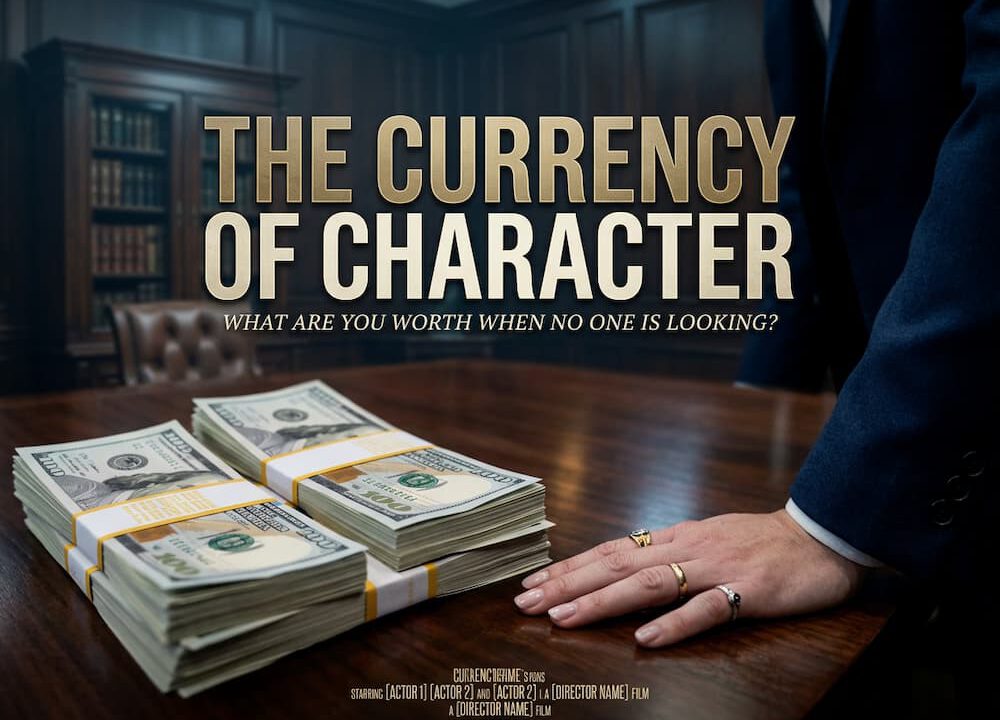
Spread out on the table before her were neatly banded stacks of hundred-dollar bills—raw, undeniable capital. To Audrey, this wasn’t just money; it was insulation. It was the universal solvent that dissolved consequences, smoothed over ethical gray areas, and bought the silence of inconvenient people. Over the past decade, she had built a financial empire by stepping over anyone who hesitated. She didn’t believe in karma; she believed in leverage.
Across from her sat a man who, in Audrey’s eyes, didn’t even register as a threat.
He was young, perhaps early thirties, wearing a flat grey suit that lacked the bespoke tailoring Audrey demanded of her own staff. He sat quietly, his eyes focused on a yellow legal pad, a cheap fountain pen moving methodically across the lines. He hadn’t spoken since she entered. He hadn’t flinched when she slammed the stacks of cash onto the table.
Audrey leaned forward, resting her knuckles on the polished wood, her eyes narrowing with practiced contempt. “Look at this asset capital,” she said, her voice dripping with condescension. “This is how real leverage is established in this district.”
The man in the grey suit didn’t look up. He simply finished a sentence on his pad.
“What a cheap suit,” Audrey scoffed, shaking her head. The silence of the room seemed to amplify her arrogance. She had spent weeks manipulating the arbitration committee, pulling strings, and cashing in favors to ensure this closed-door hearing would sweep her unauthorized financial allocations under the rug. She was minutes away from walking out fully cleared. “I don’t even know why my network permitted your presence here today. You’re entirely out of your depth.”
She crossed her arms, a triumphant smile playing on her lips. “The arbitration committee has already verified my parameters. Your presence here is an absolute joke.”
For the first time, the man stopped writing. He capped his pen with a soft click and set it down. He looked up, his expression unreadable, entirely devoid of the intimidation or reverence Audrey was so accustomed to receiving from subordinates.
“I am not your subordinate defense helper,” he said. His voice was quiet, steady, and lacked any of the performative bluster Audrey relied upon. It was the tone of a man stating a simple, immutable fact. “I am the Chief Compliance Officer for this entire regional directory.”
Audrey’s smile faltered for a fraction of a second. A cold, sharp prickle of unease started at the base of her neck. Chief Compliance Officer. That wasn’t possible. The CCO was a faceless entity, a bogeyman that executives whispered about but never actually encountered in low-level arbitration hearings.
The man reached into the inside pocket of his grey jacket. He didn’t pull out a business card or a legal brief. He pulled out a small, black Sony digital voice recorder.
He held it up, his thumb resting over the play button. “This terminal contains the full, verified confession of the audit board. Your unauthorized allocation attempt has been fully logged.”
He pressed the button.
A grainy, but unmistakably clear audio recording filled the room. It was Audrey’s own voice, captured weeks prior in what she had believed was a secure, off-the-record conversation, explicitly detailing her strategy to defraud the franchise ledger and manipulate the asset capital she now had sitting on the table.
The blood drained from Audrey’s face in a sudden, sickening rush. The white suit suddenly felt suffocating. The stacks of cash on the table, which moments ago had symbolized her invincibility, now looked like evidence.
She stared at the small green light on the voice recorder, her mind desperately scrambling for a way out, a loophole, a person to call. But the quiet certainty in the man’s eyes told her what her panic was trying to deny: there was no way out. She had built a fortress of arrogance, assuming that everyone else in the world was either buyable or breakable. She had fundamentally underestimated the quiet, unassuming power of integrity.
“Your operational timeline is finished, Audrey,” the man said, sliding a sleek digital tablet across the table. The screen glowed with an official seal. “Secure the assets and clear her from the franchise ledger.”
The words hit her with physical force. Finished.
Audrey fell back into her chair, her breath catching in her throat. The carefully constructed façade of the untouchable executive shattered completely. Her eyes widened in pure, unadulterated terror as the heavy mahogany doors at the back of the room suddenly burst open.
A flood of movement poured in—not legal aides or arbitration committee members, but journalists, photographers, and federal marshals. The blinding white bursts of camera flashes strobed across the room, capturing her raw shock, her ruined empire, and the stark contrast between the arrogant woman who had walked into the room and the terrified suspect she had instantly become.
She opened her mouth, but the sharp, mocking laughter from minutes before was gone. No words came out. The cameras continued to flash, immortalizing the exact moment consequence caught up with her.
The man in the grey suit didn’t gloat. He didn’t smile or offer a parting insult. He simply stood up, buttoned his “cheap suit,” and calmly walked out of the room, leaving Audrey alone in the blinding light of her own ruin. He understood something Audrey had spent a lifetime ignoring: that the loudest person in the room is rarely the most powerful, and that character, unlike capital, cannot be fabricated.
3. Core Life Lesson
Arrogance blinds you to the quiet power of others; true authority is rooted in integrity, not the volume of your voice or the price of your suit.
4. Discussion Question for Readers
Why do you think Audrey felt the need to belittle Julian before knowing who he was, and how might her career have ended differently if she had treated everyone in the room with basic respect?
5. Memorable Closing Quote
“You can buy a seat at the table, but you cannot buy the respect of the room. When the money runs out, all that remains is the character you showed to those you thought didn’t matter.”