Fury as asylum seekers moved into another tiny UK village after ‘no consultation’ . hyn

The council said stakeholders were kept informed.

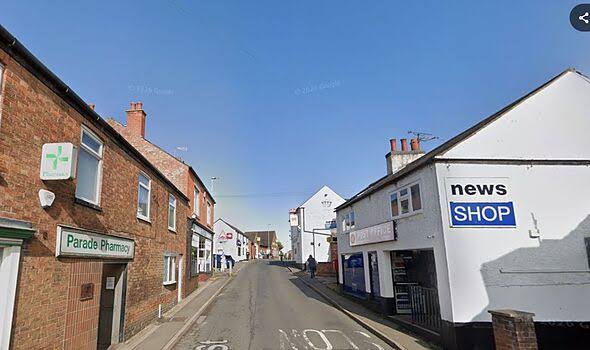
Asylum seekers have been housed in a Leicestershire village (Image: Google)
An MP has lashed out at the Government after claiming he was not consulted prior to asylum seekers being housed in his constituents’ village. It is reported that five men have been placed in a property in Fleckney, Leicestershire, as part of the Government’s plan to end the use of migrant hotels.
Conservative MP for South Leicestershire Alberto Costa said that Fleckney lacked the infrastructure and services of a place like Leicester, which he believes would be a more suitable location. He claimed the decision was made without consulting him, other elected representatives or residents, prompting him to write to the Home Secretary, Shabana Mahmood.

The Government plans to use MoD sites to house asylum seekers (Image: Getty)
However, a spokesperson for Harborough District Council said it had kept relevant stakeholders informed, speaking to Harborough FM. They said safety and wellbeing considerations were “primarily matters for Serco when assessing suitable locations”.
Private contractor Serco sources and manages the accommodation on behalf of the Government, which is working with local authorities to house asylum seekers in accommodation, including ex-military sites, to end the use of migrant hotels.
Five military sites are either in use or being explored, including MOD Bicester, MOD Barnham and MOD Linton-On-Ouse, and numbers in asylum hotels have halved in the last year to 16,000.
However, these plans have faced backlash in some areas, such as Piddington, Oxfordshire. Residents voted to become independent from the UK in a symbolic referendum to protest plans to house more than 1,000 migrants at a former military base nearby.
Previous plans to house asylum seekers in Kibworth were dropped following protestations by Harborough Conservative MP Neil O’Brien.
A Home Office spokesperson said: “The concerns of communities are central to our immigration reforms. That is why we are closing every asylum hotel and moving asylum seekers into alternative accommodation, including former military sites.
“We are working to fairly house asylum seekers across the country, engaging with local authorities to reduce the impact on communities, and we have saved taxpayers over £1 billion on asylum support costs since the election.”
More than 80,000 people with no right to be in the UK have reportedly been removed or returned since the general election in 2024.
Fury as Asylum Seekers Moved into Another Tiny UK Village After ‘No Consultation’
Fury has erupted in another small British community after asylum seekers were reportedly moved into accommodation in the Leicestershire village of Fleckney, with a local MP claiming that residents and elected representatives were not properly consulted beforehand.
The dispute has once again exposed one of the most contentious questions facing the government: how should Britain accommodate people seeking asylum while reducing its reliance on expensive hotels?
According to reports, five men have been placed in a property in Fleckney as part of the government’s wider programme to move asylum seekers out of hotels and into alternative accommodation. Conservative MP Alberto Costa, who represents South Leicestershire, has criticised the decision and said he was not consulted before the accommodation was used.
The government, however, has defended its broader strategy, arguing that it needs to move away from the use of hotels and distribute asylum accommodation more fairly around the country.
The disagreement over Fleckney is therefore about more than five people moving into one property. It reflects a much larger national argument over transparency, local consent, infrastructure and Britain’s asylum system.
A village caught in a national debate
Fleckney is a relatively small community south of Leicester.
For residents, the arrival of asylum seekers is not necessarily an issue that can be considered separately from the capacity of local services.
Questions naturally arise about housing, healthcare, transport, schools, policing and other public services.
Costa has argued that a larger urban area such as Leicester would be better equipped to accommodate asylum seekers than a smaller village.
He criticised what he described as a lack of consultation and wrote to Home Secretary Shabana Mahmood seeking answers about how the decision was reached.
His criticism reflects a concern expressed by local politicians in other parts of the country: that central government decisions can have an immediate effect on small communities without residents feeling that they have had a meaningful opportunity to influence the outcome.
The issue is particularly sensitive because asylum accommodation is often arranged through private contractors.
Who makes the decision?
One of the most important questions raised by the Fleckney controversy is who is actually responsible for choosing the accommodation.
The government has increasingly relied on contractors to source and manage properties.
In this case, Harborough District Council said it had kept relevant stakeholders informed, while stressing that safety and wellbeing considerations were primarily matters for Serco when assessing suitable locations.
That distinction matters.
Residents may assume that their local council has decided to place asylum seekers in a particular house.
In reality, the process can involve the Home Office, contractors, local authorities, property owners and other organisations.
The result can be a confusing chain of responsibility.
When residents object, they may not know which organisation has the authority to answer their concerns.
That can contribute to a feeling that decisions have been imposed rather than discussed.
The government’s hotel problem
The government says there is a straightforward reason for moving asylum seekers into alternative accommodation: it wants to end the use of asylum hotels.
Hotels became a major part of Britain’s asylum accommodation system as the backlog increased and the government struggled to process applications quickly enough.
The financial cost has been substantial.
The current government says it has been closing asylum hotels and moving people into other forms of accommodation, including former military sites. It has also said that more than 80,000 people with no right to remain in the UK have been removed or returned since the 2024 general election.
Recent reports indicate that the number of asylum seekers housed in hotels has fallen significantly, with around 16,000 still accommodated in hotels according to the figures cited in the Fleckney report.
That reduction is politically important.
Ending hotel accommodation is one of the government’s key immigration commitments.
But moving people elsewhere inevitably means that other communities will be asked to accommodate them.
Why small villages are worried
The central issue for many residents is not necessarily the nationality or legal status of the people arriving.
It is whether the local infrastructure can cope.
Small villages can have limited public transport, fewer medical services and smaller schools than major cities.
A community may also have fewer police resources and less capacity to respond quickly to new pressures.
These concerns have appeared in other parts of Britain.
In Oxfordshire, for example, residents of Piddington have fiercely opposed plans to accommodate more than 1,200 male asylum seekers at a former military site nearby. Piddington has only around 350 residents, meaning the proposed accommodation would be several times the size of the village population.
Residents subsequently held a symbolic referendum in which 285 people voted in favour of declaring independence from the UK, compared with 26 against. The vote has no legal force but demonstrated the strength of local opposition.
The Piddington dispute has become a powerful symbol of the wider argument.
Supporters of the government’s approach say asylum accommodation should not be concentrated in poorer urban areas simply because property is cheaper there.
Critics respond that dispersing asylum seekers into small communities without adequate infrastructure can create a different set of problems.
The consultation question
Perhaps the most politically important element of the Fleckney dispute is the allegation of inadequate consultation.
Local democracy depends partly on residents believing that important decisions affecting their communities are made transparently.
When people discover a new use for a property after the decision has already been made, they can feel excluded from the process.
That does not necessarily mean that every accommodation decision legally requires a local referendum or approval.
The government has responsibilities under the asylum system and must provide accommodation to people whose claims are being processed.
But there is a difference between legal authority and political consent.
A government can have the power to make a decision while still facing legitimate questions about how openly it communicated that decision.
This is why consultation has become such a central issue in disputes across Britain.
The Welsh example
A similar controversy emerged in the Welsh village of Gronant earlier this year.
Residents said they were shocked to discover that 13 of 15 newly built housing units had been allocated to asylum-seeking families through a government contractor.
Locals said they had expected the homes to become ordinary rental or social housing and complained that they had not been informed in advance.
The dispute illustrates why transparency matters.
Even people who accept that asylum seekers need accommodation can object to the way a decision is made.
The feeling of being “blindsided” can become a political issue in its own right.
A difficult balancing act
The government faces a difficult balancing act.
On one side is the need to provide accommodation for people whose asylum claims are being processed.
On the other is the responsibility to consider the impact of accommodation decisions on local communities.
There is also a financial argument.
Keeping asylum seekers in hotels is expensive, while alternative accommodation can potentially reduce costs.
The government says it has already saved taxpayers more than £1 billion in asylum support costs since the 2024 election.
But cost savings alone cannot resolve the political problem.
If communities believe that they are being asked to absorb large numbers of people without adequate services or consultation, resentment can grow.
The danger of misinformation
There is another challenge.
Immigration disputes can quickly become dominated by rumours and exaggerated claims.
The Guardian recently reported on tensions in Crowborough, East Sussex, where more than 300 asylum seekers were housed at a nearby military camp. Residents expressed concerns about the impact on their community, while the newspaper also reported that some claims about asylum seekers and crime were not supported by official figures.
That makes accurate information particularly important.
Communities deserve clear answers about how many people are being accommodated, for how long, who is responsible for the site, what support is available and what arrangements exist for healthcare and security.
At the same time, asylum seekers should not be collectively blamed for individual crimes or problems without evidence.
A serious debate requires a distinction between legitimate concerns and unsupported allegations.
Reform and the political consequences
The issue is also likely to be significant for Reform UK.
Nigel Farage’s party has made immigration one of its central political themes.
Every controversy involving asylum accommodation provides Reform with an opportunity to argue that the government has failed to control Britain’s borders or manage the asylum system effectively.
The Conservatives are also seeking to challenge Labour from the right on immigration.
That means Burnham’s government faces pressure from several directions.
It must reduce the asylum backlog, close hotels, increase removals where legally possible and reassure local communities — all while dealing with the humanitarian responsibilities attached to asylum law.
Failure on any one of those fronts could become politically costly.
The wider question: who should carry the burden?
Perhaps the most difficult question is whether asylum accommodation should be concentrated in particular communities or distributed more widely.
Historically, asylum seekers have often been housed in areas where accommodation is relatively inexpensive.
That has led to concerns that some towns and cities are carrying a disproportionate share of the responsibility.
The government’s attempt to spread accommodation more widely is therefore based on an argument about fairness.
But fairness to one community can sometimes feel like unfairness to another.
For a small village such as Fleckney, even a relatively small number of additional residents can attract much more attention than the same number would in a major city.
That is why local circumstances matter.
A test of government transparency
The Fleckney controversy ultimately raises a question that goes beyond immigration.
It is a test of whether central government can make difficult decisions while maintaining public confidence.
The government is entitled to argue that it must provide accommodation and reduce its dependence on hotels.
Residents are equally entitled to ask how decisions affecting their communities were reached.
The answer should involve transparency rather than slogans.
Local people need to know why a property was selected, who made the decision, how long it will be used, what safeguards are in place and what support will be available to the community.
Asylum seekers, meanwhile, need safe and suitable accommodation while their claims are assessed.
Those objectives do not necessarily have to be incompatible.
But achieving them requires communication.
The controversy in Fleckney demonstrates what happens when residents believe that communication has failed.
For the government, moving asylum seekers out of hotels may be an important part of its immigration strategy.
The harder task is ensuring that the replacement system does not simply move the political controversy from hotels in major towns to homes and communities in Britain’s smallest villages.