Blow to Nigel Farage as Reform sheds over 50 newly-elected councillors in five months . hyn

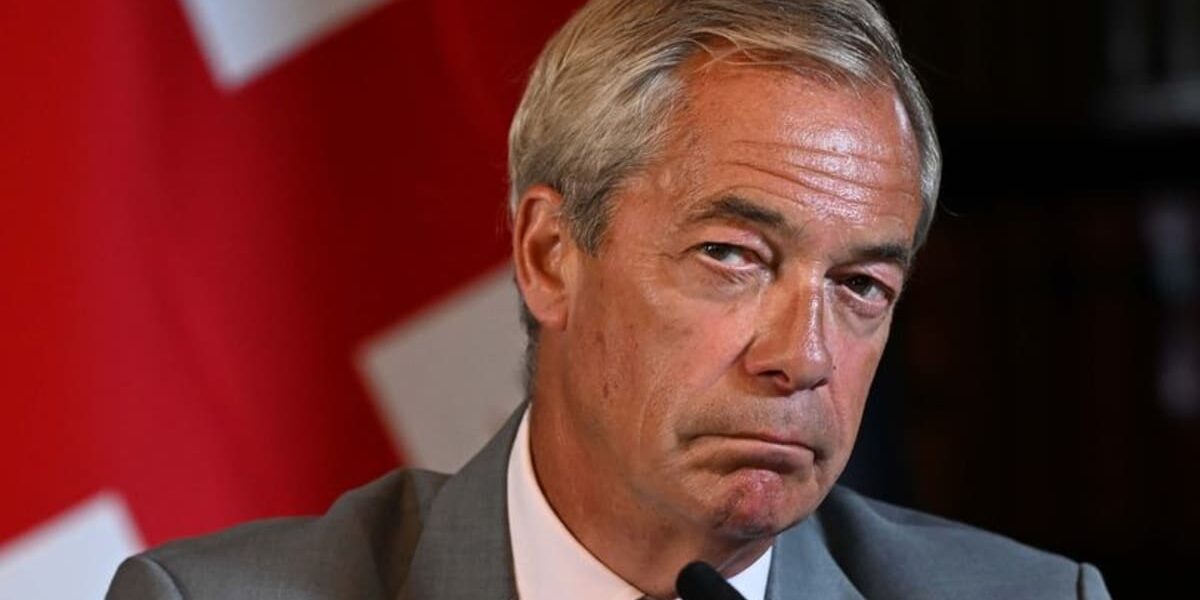
“Shambolic” Reform UK has lost over 50 newly-elected councillors in just over five months, new figures show.
Article continues below
Nigel Farage’s party is losing a member of the 2026 intake every three days on average due to resignations, defections and suspensions, according to an online tracker.
The latest update raises questions about Mr Farage’s ability to lead a party into government. A tracker set up by campaign group Best For Britain reveals Reform has shed 51 council representatives who were elected in May.
Article continues below
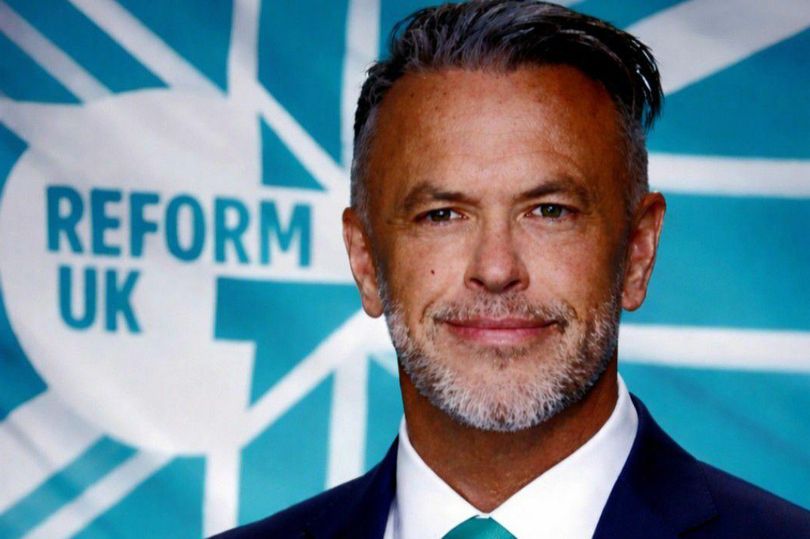
Julia Meadon, the group’s director of digital, told The Mirror: “We’ve been closely monitoring Reform UK’s shambolic approach to local government – and surprise, surprise, their councillors are quitting and being turfed out in their droves.
“While Farage slurps oysters and sips champagne with billionaires, the people elected to represent Britain’s communities – who said they could be trusted to take care of the vulnerable, to run our libraries, and keep our streets clean – are walking out the door.
We use your sign-up to provide content in ways you’ve consented to and improve our understanding of you. This may include adverts from us and third parties based on our knowledge of you. More info
“Just imagine what they’d do if trusted with our economy, our NHS and our armed forces.”
Among recent resignations is Solihull councillor Eleonora Gough, who said the local group had become “divisive and unprofessional rather than constructive”. In her resignation letter last month she said: “I am not the first to reach this conclusion and I doubt I will be the last. My decision is final.”
And three representatives walked away from the Reform group in Plymouth last month – two joining Restore Britain and one becoming an independent. Last month Newcastle councillor Daniel Astley was expelled from the party after previous links to the far-right Homeland Party came to light.
Article continues below
He said in a statement: “On the Homeland Party, I do not accept the characterisation of ‘extremist’ given, as mentioned, I believe their policies at the time to have been very close to Reform’s policies now. I have not had any contact with them since last year, I have never worked on policy, attended a conference or organised elections for them.”
Those currently suspended include Sunderland City councillor Glenn Gibbins, 66, who has been charged with posting a grossly offensive comment about Nigerians on social media.
He was first suspended by Reform in May after the post came to light, but then reinstated. However he was suspended again after legal proceedings started.
Article continues below
Reform UK gained 1,451 councillors and took control of 14 councils across England in May this year. Back in August, when the tracker was launched, Best For Britain’s chief executive Naomi Smith told The Mirror: “Whether they’ve resigned, been suspended, or were simply never up to the job, Reform UK have been shedding councillors ever since May.
“So much for the tidal wave about to break over British politics, this is a party that would struggle to run a bath.”
The Mirror has contacted Reform UK for comment.
Blow to Nigel Farage as Reform Sheds Over 50 Newly-Elected Councillors in Five Months
Reform UK has lost more than 50 councillors elected under its banner just months after making major gains in England’s local elections, according to a new tracker that highlights the challenges facing Nigel Farage’s party as it attempts to turn electoral momentum into a lasting political organisation.
The figures show that 51 councillors elected in May 2026 have since resigned, defected, been expelled or been suspended. According to the tracker established by Best for Britain, that represents roughly one member of the new intake leaving the party every three days.
The scale of the departures has renewed questions about Reform UK’s ability to manage its rapidly expanding presence in local government. The party won 1,451 councillor seats and took control of 14 councils during the May elections, transforming its position in English local politics.
However, the subsequent departures demonstrate that winning seats is only one part of building a political organisation. Keeping councillors in place, maintaining discipline and ensuring that elected representatives operate effectively can be an equally difficult task.
A dramatic rise at the local elections
Reform UK entered the 2026 local elections with ambitions of breaking through across England.
The results delivered a major increase in the party’s representation. Hundreds of councillors were elected under the Reform banner, giving Farage’s organisation control of several councils and creating a much larger network of elected representatives than it had previously possessed.
The scale of the victory also created an immediate organisational challenge.
Reform had to recruit, vet and support large numbers of candidates, many of whom had limited experience of elected office. The party’s rapid expansion meant that some newly elected councillors were entering local government for the first time.
Within months, a significant number had departed.
The 51 departures identified by Best for Britain include people who resigned voluntarily, councillors who were suspended and representatives who were expelled from the party. The circumstances differ from case to case, meaning the figure should not be interpreted as a single category of political defections.
Nevertheless, the cumulative number has attracted political attention.
Resignations and internal disputes
One of the most recent cases involved Solihull councillor Eleonora Gough.
Gough resigned from Reform in September, saying the local group had become “divisive and unprofessional rather than constructive”. She said she was not the first person to reach that conclusion and believed she would not be the last.
Her departure illustrates one of the difficulties confronting rapidly expanding political parties: maintaining cohesion among local representatives who may have different political backgrounds, personalities and expectations.
Reform’s local groups are now operating across a large number of councils, and disagreements that might once have remained internal can quickly become public.
In Plymouth, three representatives also left the Reform group during September. Two joined Restore Britain while another became an independent councillor.
Such movements are significant because they reduce the number of councillors formally representing Reform while potentially creating new political groupings within local authorities.
Suspensions and vetting controversies
Not every departure has been the result of a councillor voluntarily choosing to leave.
Some representatives have been suspended or expelled following controversies surrounding their conduct or previous associations.
Newcastle councillor Daniel Astley was expelled from Reform after previous links to the far-right Homeland Party came to light. Astley disputed the characterisation of Homeland as extremist and said that he had not had contact with the organisation since the previous year.
Other controversies have involved social media activity.
Sunderland City councillor Glenn Gibbins was suspended after being charged over an allegedly grossly offensive social media comment about Nigerians. He had initially been suspended by Reform in May, later reinstated and then suspended again after legal proceedings began.
These cases highlight the difficulties faced by parties that suddenly expand their candidate base.
Candidate selection and vetting become particularly important when hundreds of people are seeking elected office under a party label. Any controversial history discovered after an election can create political and reputational problems for the organisation.
Reform’s rapid expansion creates new pressures
The number of councillor departures needs to be viewed against the much larger number of seats Reform won.
Losing 51 representatives from an intake of 1,451 does not mean the party has lost its local-government breakthrough. It still has a substantially larger presence in English councils than it had before the elections.
However, the departures raise questions about how effectively the party can manage that expansion.
A political organisation with thousands of elected representatives requires structures for training, communication, discipline and policy coordination. Councillors also need to understand local-government procedures, budgets and legal responsibilities.
Established parties have spent decades developing such structures.
Reform’s rapid growth means it has had to develop them while simultaneously dealing with a dramatically larger number of elected representatives.
The party’s ability to do that will be closely watched.
What the figures mean for Nigel Farage
The departures also create a political challenge for Farage personally.
Reform has increasingly presented itself as a serious national political force capable of competing with Labour and the Conservatives. Its success in the local elections was an important part of that argument.
But national political ambitions require more than strong polling or successful election campaigns.
A party seeking long-term influence needs councillors who can demonstrate competence in local government and build relationships with communities.
If representatives repeatedly leave, are suspended or become embroiled in controversies, opponents can use those incidents to question the party’s organisational preparedness.
Best for Britain has been highly critical of Reform’s record.
Julia Meadon, the organisation’s director of digital, described the party’s approach to local government as “shambolic” and argued that the departures raised questions about whether Reform could be trusted with greater responsibilities.
Those comments represent the view of a political campaign organisation and should therefore be understood in that context.
Reform itself has been contacted for comment on the figures.
A problem faced by fast-growing parties
The difficulties Reform is experiencing are not unique to one political movement.
Rapidly expanding parties can encounter problems when electoral success outpaces organisational development.
Candidates may be selected quickly, local groups may lack experienced leadership and internal disagreements may become more difficult to manage.
The challenge is especially pronounced when a party attracts people from outside traditional political structures.
Reform has drawn support from former Conservatives, independents and people with little previous experience in elected politics. That broad appeal can help a party expand rapidly, but it can also produce differences over strategy and conduct.
The party must therefore balance its desire for rapid growth with the need for effective candidate selection.
The importance of local government
The councillor controversy matters because local government provides a practical test of political promises.
Councillors make decisions affecting everyday services, including local roads, planning, housing, waste collection, social care and public facilities.
Winning control of a council therefore creates an opportunity for a party to demonstrate how its policies work in practice.
For Reform, the next few years will provide an important test.
The party can use its control of councils to demonstrate whether it can reduce spending, improve services and deliver the changes promised during the election campaign.
But that requires stable political groups capable of working together.
Every resignation or suspension potentially makes that task more complicated.
The wider political battle
The issue comes at a time when Reform UK is attempting to establish itself as a major force in British politics.
Farage has sought to position Reform as an alternative to the traditional parties, particularly by appealing to voters concerned about immigration, taxation, public services and national sovereignty.
The party’s local election performance strengthened that argument.
Yet the councillor departures provide opponents with a counterargument: electoral popularity and organisational competence are not necessarily the same thing.
Reform will need to show that it can convert its election victories into effective local administration.
That means resolving disputes quickly, improving candidate vetting and ensuring councillors understand the responsibilities that come with office.
What happens next?
The immediate question is whether the pace of departures slows down.
The tracker provides a snapshot of the first five months following the May elections, rather than a final assessment of Reform’s local-government performance.
Some councillors may continue to leave, while others may return to the party or resolve disputes with local organisations.
The party also has time to strengthen its structures.
Reform’s leadership could use the experience of 2026 to develop more extensive training and vetting systems ahead of future elections. It could also establish clearer procedures for dealing with controversial statements and disagreements between councillors and local party organisations.
Such measures could help reduce the risk of further departures.
A significant test for Reform UK
The loss of 51 newly elected councillors is undoubtedly an important development for Reform UK, particularly given how quickly the departures have occurred.
But the figures should also be placed in context.
The party remains a major force in English local government after winning 1,451 seats and taking control of 14 councils in May.
The question is therefore not simply whether Reform has lost councillors. It is whether the party can turn its unprecedented expansion into a stable and effective political organisation.
For Farage, that may be one of the most important challenges facing Reform in the period ahead.
Winning elections can create momentum, but governing requires organisation, discipline and the ability to manage disagreements.
The departures since May have exposed some of the pressures created by Reform’s rapid growth. Whether those problems become a temporary consequence of expansion or a persistent feature of the party will depend largely on how its leadership responds.
The next stage of Reform’s political development will therefore be about more than winning votes. It will be about proving that the organisation behind those votes can function effectively once its candidates take office.
With more than 50 councillors already gone from the May intake, that challenge is now impossible to ignore.