Horror as migrant boat carrying 77 people sinks in sea – huge search launched. hyn

Horror as Migrant Boat Carrying 77 People Sinks in Sea – Huge Search Launched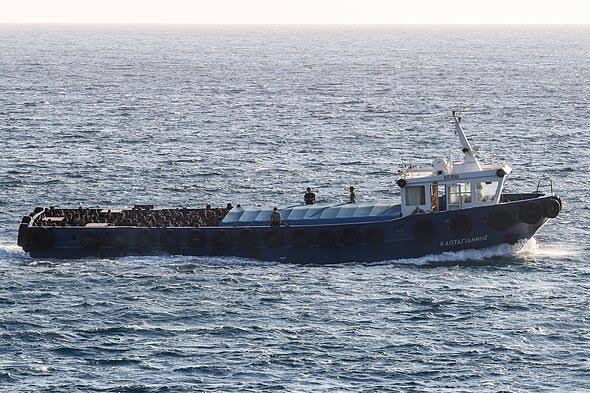
A major search-and-rescue operation was launched after a migrant boat carrying 77 people sank in waters off the Greek island of Gavdos, leaving one person dead and around 25 others missing.
The incident unfolded south of Crete, where maritime authorities faced a desperate race against time to locate people believed to have disappeared into the sea. According to survivors, 77 people had been aboard the vessel when it went down. Fifty-one people were rescued by nearby boats, while one person was found unconscious and later died. Around 25 people remained missing as the search continued.
The tragedy has once again highlighted the dangers faced by migrants attempting to reach Europe by sea in overcrowded and often unsuitable vessels.
A Desperate Search at Sea
The operation involved several vessels and aircraft as authorities searched a large area around Gavdos.
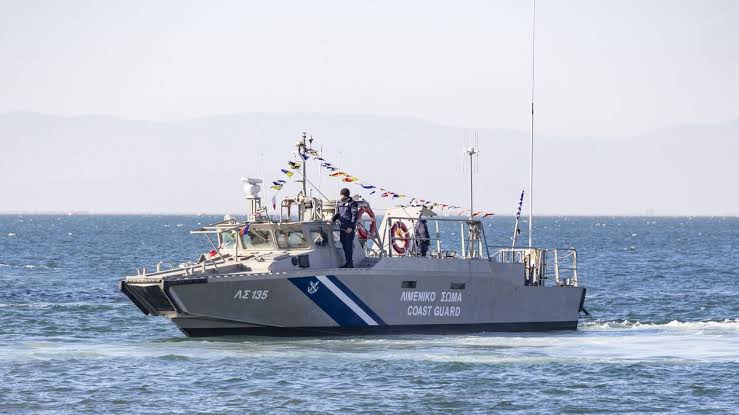
Reports said four ships, boats operated by the European border agency Frontex and Greek coastguard assets were involved in the rescue effort. A helicopter was also deployed as authorities attempted to locate survivors in the water.
The scale of the operation reflected the uncertainty surrounding the fate of those still missing.
When a vessel sinks offshore, finding people can become extremely difficult. Currents, wind, waves and visibility can quickly move survivors and debris away from the original location.
Strong winds were reported to be complicating the search.
For rescue teams, every minute can matter. People who survive an initial sinking may still face severe exposure to cold water, exhaustion and injury. The longer the search continues, the more difficult the operation can become.
Survivors Provided the Crucial Number
One of the most important pieces of information came from those who survived.
Authorities said the 77-person figure was based on reports from survivors who were rescued after the boat went down. That means the exact number of people on board could still be subject to verification.
Fifty-one people were picked up by two vessels in the area, according to the Greek coastguard.
That left a significant gap between the estimated number aboard and the number known to have survived.
The discovery of one person unconscious added to fears that the sinking had caused serious casualties.
The search therefore became not only a rescue mission but also an effort to establish exactly what had happened to everyone who had been on the vessel.
The Route From North Africa
Gavdos and Crete have become increasingly important locations in the European migration debate.
The islands lie relatively close to North Africa compared with some other routes into Europe. Gavdos is around 320 kilometres from the Libyan coast, making it a destination for boats departing from Libya and attempting to reach Greece.
For migrants, the journey can appear to offer a route into the European Union.
For smugglers, it can become a lucrative business.
The vessels used on such journeys are often heavily overcrowded, and passengers may have little understanding of the conditions they will face once they leave shore.
Weather conditions can change rapidly.
Even when the sea initially appears manageable, mechanical failure, flooding or overcrowding can turn a voyage into a life-threatening emergency.
Why These Journeys Remain So Dangerous
The latest sinking is another reminder that the dangers do not disappear simply because migration routes change.
People attempting sea crossings can face several risks at once.
The boats may be overloaded. Navigation equipment may be inadequate. Passengers may have little access to life jackets. Fuel supplies can be unreliable, and smugglers may prioritise getting people onto a vessel rather than ensuring that it is capable of completing the journey safely.
Once at sea, passengers may have few options.
If the engine fails, the vessel can drift for hours or days. If the hull begins taking on water, an overcrowded boat can become unstable extremely quickly.
The tragedy off Gavdos demonstrates the potential consequences.
Greece Under Political Pressure
The sinking also comes amid intense political debate in Greece over migration.
Crete and nearby islands have experienced changes in migration flows in recent years. The Greek government has introduced tougher measures while arguing that irregular migration must be reduced and that Europe needs stronger external border controls.
In July, the Greek government temporarily suspended asylum claims for people arriving by sea from North Africa, a policy that generated significant controversy.
The government has argued that stronger deterrence is necessary to discourage dangerous journeys.
Humanitarian organisations and migration advocates have taken a different view, stressing the importance of safe and legal routes and access to asylum procedures.
The debate is particularly difficult because governments must balance border control with international protection obligations.
The Human Cost
Behind the statistics are individual lives.
The people aboard the vessel were not simply numbers in a coastguard report. Each person had a personal history, family connections and reasons for attempting the journey.
For relatives waiting for news, the uncertainty can be devastating.
When authorities report that dozens of people are missing, families may have no immediate information about whether their loved ones survived.
The search operation therefore carries enormous importance beyond its operational objective.
Every additional survivor recovered from the water can bring relief to a family waiting thousands of kilometres away.
At the same time, every body recovered can turn uncertainty into grief.
The Role of Smuggling Networks
The disaster also raises questions about the criminal networks organising irregular journeys.
Smuggling groups can arrange transportation, collect money from passengers and organise departures while leaving migrants to face the risks once the boat is at sea.
European governments have increasingly focused on disrupting these networks.
But stopping smugglers is difficult when demand for irregular migration remains high.
As long as people believe that reaching Europe by sea is their only available route to safety or a better future, criminal organisations can attempt to exploit that demand.
This creates a cycle that is difficult to break.
Safe Routes and Border Control
The tragedy highlights a central disagreement in European migration policy.
Governments argue that uncontrolled migration must be reduced and that people cannot be allowed to rely on dangerous irregular crossings.
Humanitarian organisations argue that people are more likely to avoid smugglers when safe and legal alternatives exist.
These positions are not necessarily mutually exclusive.
A functioning migration system could combine effective border enforcement with credible legal routes for people who qualify for protection or other forms of admission.
The challenge is designing and implementing such a system at a scale large enough to influence people’s decisions before they board dangerous boats.
A Wider European Problem
The Gavdos sinking is not an isolated example of maritime migration tragedies.
People have attempted to reach Europe through several sea routes, including the Mediterranean and the English Channel. European authorities regularly conduct rescue operations involving overloaded boats in distress.
Britain has experienced its own deadly Channel crossings. A UK Marine Accident Investigation Branch investigation into a 2021 Dover Strait tragedy found that an inflatable migrant boat became flooded and partially sank, with at least 27 people losing their lives. The investigation highlighted problems involving the suitability of the vessel and the difficulties of locating and responding to boats in distress.
These incidents demonstrate a recurring pattern: unsuitable vessels, large numbers of passengers and journeys undertaken in dangerous conditions.
What Happens to Those Rescued?
Once rescued, the survivors face another stage of uncertainty.
Those brought to Crete are subject to the procedures established by Greek authorities. Reports said the rescued migrants were expected to be taken to Crete after being recovered from the sea.
Their cases can then involve identification, medical assessment, immigration procedures and, where applicable, asylum applications.
For some, the journey that began as an attempt to reach Europe becomes the beginning of a lengthy legal process.
For others, authorities may determine that they do not qualify to remain.
The outcome depends on individual circumstances and the applicable legal framework.
A Tragedy That Raises Difficult Questions
The sinking off Gavdos has once again exposed the human cost of irregular maritime migration.
One person has died. Around 25 remained missing according to the initial reports, while 51 were rescued. Those numbers could change as the search and investigation continue.
The immediate priority remains finding anyone who may still be alive.
Beyond the rescue operation, however, the tragedy raises much wider questions.
How can European countries prevent dangerous crossings without abandoning people who genuinely need protection?
How can governments dismantle smuggling networks?
Can legal migration and asylum pathways be expanded sufficiently to reduce demand for dangerous sea journeys?
And how should Europe balance border enforcement with humanitarian responsibilities?
There are no simple answers.
What is clear is that overcrowded boats travelling long distances across open water create extraordinary risks.
The people on board may believe that the journey offers their best chance of reaching safety or a better life. Yet the sea offers no guarantees, and a vessel that appears capable of carrying dozens of passengers can become a disaster zone within minutes.
The search off Gavdos is therefore more than another maritime rescue operation. It is a stark reminder of the consequences of irregular migration routes and the desperate circumstances that drive people to use them.
As rescue teams continue searching for those missing, the immediate hope is that more lives can still be saved.
The longer-term challenge for Europe is preventing future families from ever having to make the same dangerous choice.