Migrant tragedy as 22 die after boat ‘drifted for 6 days without food and water’ . hyn

Migrant Tragedy as 22 Die After Boat ‘Drifted for 6 Days Without Food and Water’
A devastating migrant tragedy in the Mediterranean has highlighted once again the extreme dangers faced by people attempting to reach Europe in overcrowded and poorly equipped boats.
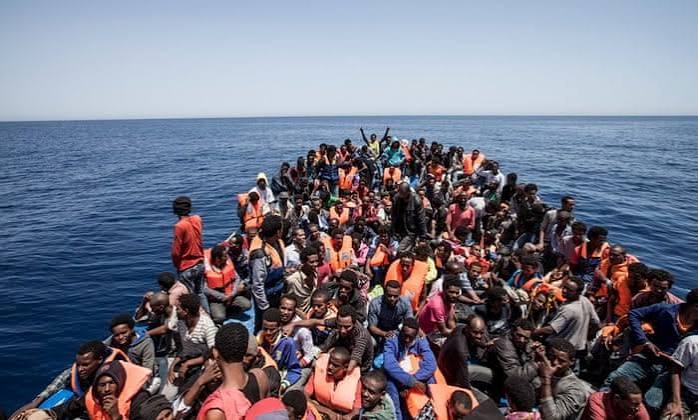
Twenty-two migrants are reported to have died after a rubber boat spent six days adrift off the coast of Crete, with survivors telling Greek authorities that the passengers ran out of food and water during the ordeal. Twenty-six others were rescued after the vessel was located south of the Greek island.
The incident is one of the starkest reminders this year of how quickly an apparently straightforward sea crossing can turn into a fight for survival.
According to accounts given by survivors, the boat left the Libyan port of Tobruk carrying 48 people on March 21. After losing its bearings and encountering difficult weather, the vessel remained at sea for six days.
By the time rescuers reached the boat, only 26 people were alive.
The survivors reportedly included a woman and a child. Several people required medical treatment after being brought ashore.
A journey that turned into a nightmare
The journey was reportedly intended to take the migrants from Libya towards Europe.
Instead, the passengers found themselves stranded in the Mediterranean.
Greek coastguard officials said survivors reported that the boat lost its direction and remained at sea without food and water for six days. Difficult weather conditions compounded the shortage of supplies, with exhaustion and dehydration contributing to the deaths.
The vessel was eventually detected approximately 52 to 53 nautical miles south of Ierapetra in southern Crete.
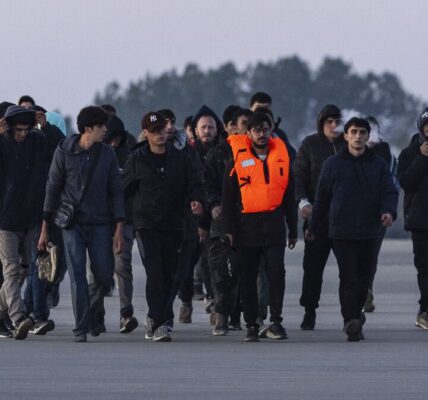
A Frontex vessel was involved in the rescue operation and brought the survivors to safety. They were subsequently transferred to the port of Kaloi Limenes before being taken to Heraklion for further assistance and medical assessment.
For those who survived, the experience will almost certainly have been traumatic.
They had watched fellow passengers become increasingly weak while there was little that could be done to help them.
The tragedy also demonstrates the dangers created when boats designed for short journeys are used for long and unpredictable crossings of the Mediterranean.
Survivors’ account of the deaths
Perhaps the most disturbing element of the incident concerns what survivors told investigators happened to the people who died.
According to Greek authorities, survivors said that the bodies of those who died were thrown into the sea on the orders of one of the suspected smugglers.
Because the bodies were reportedly lost at sea, determining precisely how each person died may be extremely difficult.
The accounts provided by survivors will therefore form an important part of the investigation.
Authorities have reportedly arrested two South Sudanese men suspected of involvement in operating the boat. The men, both young adults, face investigation in connection with illegal entry and negligent homicide, according to reports from Greece.
The case illustrates a particularly grim feature of irregular migration: people who are desperate to reach Europe can become dependent on criminal networks operating outside normal safety standards.
The business of people smuggling
Human smuggling networks are able to exploit people who have few safe alternatives.
Passengers can pay thousands of euros for a place on a boat that may be overcrowded, poorly maintained and unsuitable for open-sea travel.
In this case, survivors reportedly said they had paid substantial sums for the journey from Libya to Greece. One Greek report said some passengers had paid between €7,100 and €8,500.
Such figures underline the extraordinary financial incentives involved.
For smugglers, a boat represents a source of income.
For the people aboard it, however, the consequences of failure can be fatal.
There is also a fundamental imbalance of power. Once a migrant has handed over money and boarded a vessel far from shore, there may be little opportunity to leave, demand better conditions or turn back.
That vulnerability becomes especially dangerous when weather deteriorates or an engine fails.
Why six days at sea matters
The length of this particular journey is crucial.
A Mediterranean crossing is already dangerous under normal circumstances. A boat drifting for six days without adequate supplies is a completely different situation.
Water is especially critical.
A person can survive for a significant period without food, but dehydration can become life-threatening much more quickly, particularly under exposure to heat, wind and salt water.
Food shortages compound the problem by weakening people physically.
As the journey continued, those already vulnerable would have become increasingly exhausted.
The boat’s passengers were also reportedly exposed to unfavourable weather. Greek authorities said the combination of difficult conditions and a lack of food and water contributed to deaths through exhaustion.
This helps explain why a boat can become a humanitarian emergency long before it actually sinks.
Crete and the changing Mediterranean route
Crete has become increasingly significant in discussions about migration routes into Europe.
The island sits relatively close to North Africa compared with many other European destinations, making crossings from eastern Libya possible.
But geographical proximity can create a misleading impression of safety.
The Mediterranean remains a dangerous environment, particularly for small inflatable boats with limited fuel, navigation equipment and emergency supplies.
Greece has experienced repeated arrivals of migrants and refugees over many years. The country became one of the principal entry points during Europe’s migration crisis of 2015 and 2016, when hundreds of thousands of people reached Greek territory.
The routes have changed since then.
Smuggling networks adapt quickly to increased patrols, border controls and enforcement operations.
When one route becomes more difficult, another can emerge.
Europe faces a difficult political dilemma
The tragedy also comes at a time when European governments are debating how to respond to irregular migration.
There is growing political pressure across Europe to strengthen external borders, accelerate asylum decisions and return people who do not qualify for protection.
At the same time, governments face pressure from humanitarian organisations to provide safer legal routes and ensure that people fleeing conflict or persecution do not have to depend on smugglers.
The debate is particularly difficult because both sides point to genuine dangers.
Governments argue that uncontrolled irregular migration places pressure on asylum systems, border agencies and local communities.
Humanitarian organisations argue that closing routes without creating viable alternatives can push vulnerable people towards increasingly dangerous journeys.
The deaths off Crete demonstrate the consequences of that tension.
The wider human cost
Statistics can sometimes make migration seem abstract.
A figure showing thousands of people crossing the Mediterranean does not reveal what happens inside an individual boat.
There may be families, children, workers and people who have already experienced conflict or persecution.
There may also be people who have spent months or years trying to reach Europe before finally paying a smuggler.
On this boat, 22 people reportedly died before reaching their destination.
Their final journey was not simply a failed attempt to enter Europe. It became a humanitarian disaster.
The 26 survivors now face another stage of uncertainty as Greek authorities investigate their circumstances and determine their legal status.
A warning for future crossings
The incident is likely to intensify arguments over Mediterranean migration policy.
For those demanding stronger border controls, it demonstrates the brutality of the smuggling industry and the need to prevent dangerous crossings.
For those advocating expanded legal routes, it demonstrates what can happen when people believe that the only available path to Europe involves an unsafe boat.
Both perspectives point towards the same underlying reality: the current system is producing deadly journeys.
The tragedy also demonstrates why search-and-rescue capacity remains so important.
In this case, the intervention of a Frontex vessel meant that 26 people survived. Without that intervention, the death toll could potentially have been even higher.
The political debate must not obscure the victims
Migration has become one of Europe’s most politically divisive issues.
Politicians on the right frequently use tragedies at sea to argue for stronger deterrence and tougher border enforcement. Parties on the left often emphasise the humanitarian consequences of irregular migration and the need to tackle the causes that drive people to leave their homes.
But behind the political arguments are individual lives.
Twenty-two people are reported to have died on this particular journey.
Their deaths should not simply become another statistic in Europe’s migration debate.
The circumstances described by survivors are a reminder of how vulnerable migrants can become when they place their lives in the hands of smugglers.
The case also highlights the responsibility of authorities to establish exactly what happened, identify those responsible and provide appropriate support to the survivors.
A tragedy that raises uncomfortable questions
The six-day ordeal off Crete leaves difficult questions for governments across Europe.
How can dangerous crossings be reduced without simply pushing smugglers towards more remote and hazardous routes?
How can asylum systems distinguish quickly between people in genuine need of protection and those without a legal basis to remain?
How can criminal smuggling networks be dismantled when demand for their services remains so high?
And perhaps most importantly, how can Europe prevent desperate people from believing that risking death at sea is worth the possibility of reaching safety?
There are no simple answers.
But the deaths of 22 people after a boat drifted for days without food and water demonstrate the human cost of failing to find better ones.
The Mediterranean has become a graveyard for too many migrants.
Every new tragedy brings renewed promises of action.
The challenge for European governments is to ensure that those promises result in policies capable of saving lives, disrupting criminal smuggling networks and creating a migration system that is both secure and humane.
For the 26 people rescued off Crete, survival came just in time.
For the 22 who died, it came too late.