🔥 QUIET CONFIDENCE, DEADLY PRECISION: WHY THE FINAL DUEL IN QUIGLEY DOWN UNDER BECAME A WESTERN CLASSIC

FULL VIDEO :
🔥 QUIET CONFIDENCE, DEADLY PRECISION: WHY THE FINAL DUEL IN QUIGLEY DOWN UNDER BECAME A WESTERN CLASSIC
Few moments in Western cinema capture tension as effectively as the final showdown in Quigley Down Under. Released in 1990, the film stars Tom Selleck as Matthew Quigley, an American sharpshooter who travels to Australia after answering an advertisement from wealthy landowner Elliott Marston, played with cold sophistication by Alan Rickman. What begins as an opportunity for employment quickly turns into a moral battle, and by the time Quigley and Marston stand face to face near the end of the story, their confrontation has become about far more than who can draw a revolver faster.
The image of Quigley standing quietly while a gun is pointed toward him perfectly captures what makes the character so compelling. He does not need to shout, threaten, or prove that he is dangerous. His confidence comes from experience. Throughout the film, audiences have already seen what he can do with his custom long-range rifle. He can hit targets that most men can barely see. But the final confrontation removes the weapon that has defined him for much of the story. Suddenly, Quigley is being forced into another man’s game.
That is exactly what Marston wants.
From the beginning, Marston is fascinated by American gunfighters and the mythology of the Old West. He has built his own fantasy around quick-draw contests, revolvers, and frontier violence. When Quigley first arrives, Marston assumes he has hired a man who shares the same ruthless attitude. He expects Quigley to be nothing more than a highly skilled weapon that can be used against people standing in the way of his ambitions.
He is very wrong.
Quigley’s greatest strength is not his shooting ability. It is the fact that he knows exactly where his moral line stands. Once he discovers the true nature of the job Marston wants him to perform, Quigley refuses. That decision drives the entire conflict of the film. From that moment forward, Marston sees Quigley not simply as an employee who disobeyed him, but as a threat that must be eliminated.
Their rivalry becomes more personal with every encounter.
Marston has money, hired men, land, and influence. Quigley has almost nothing except his skill, his determination, and his refusal to abandon people who are being treated unjustly. The contrast between them makes the final duel more powerful because each man represents a very different idea of strength.
Marston believes power comes from control.
Quigley believes it comes from character.
By the time the final confrontation arrives, Marston thinks he has found the perfect way to defeat the American marksman. Quigley’s famous weapon is the long rifle, so Marston decides to reduce the contest to close-range revolver shooting. In his mind, this removes Quigley’s greatest advantage.
It appears logical.
Quigley has been defined throughout the film by extraordinary long-range accuracy. Marston has spent years practicing the kind of quick-draw gunfighting associated with American Western legends. He believes he understands the rules. He believes he has created a fair contest.
Most importantly, he believes he knows Quigley.
That assumption is his greatest mistake.
The brilliance of the scene comes from how little Quigley reveals before the shooting begins. He does not explain himself. He does not boast about hidden skills. He does not desperately try to escape the situation. Instead, he waits.
That calmness creates enormous tension.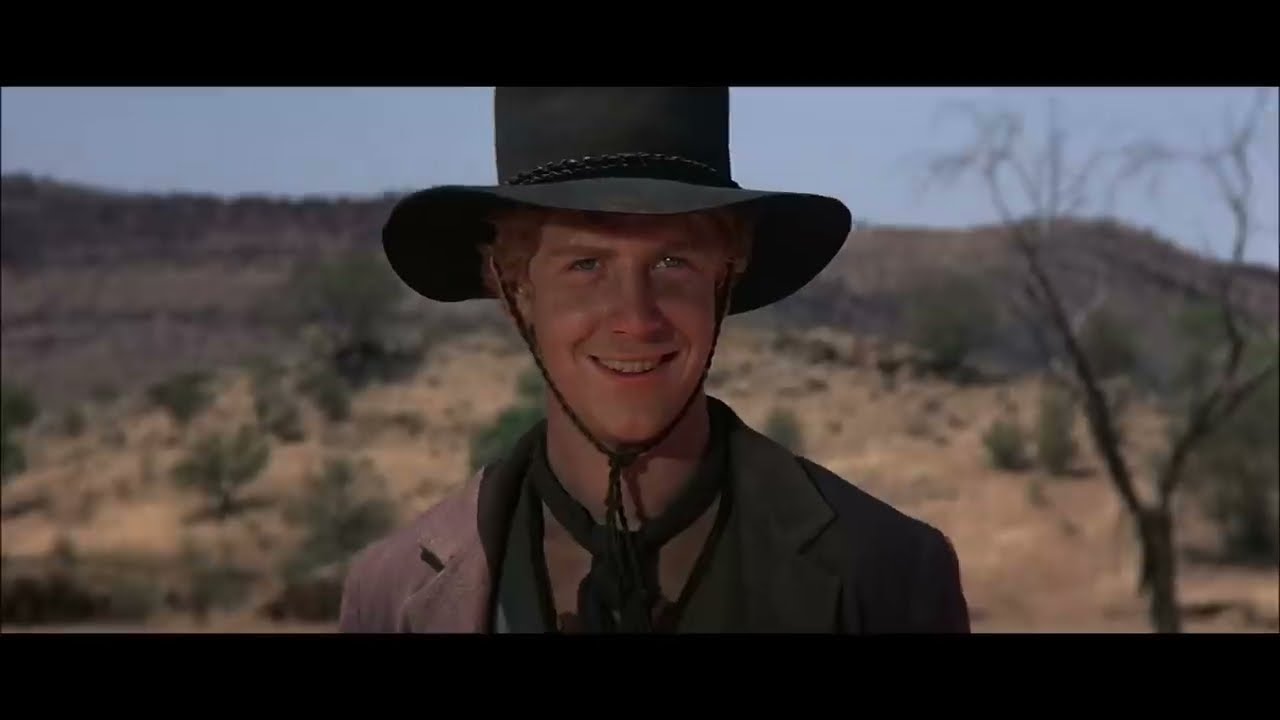
A classic Western showdown is rarely about movement. It is about stillness before movement. Two men stand several feet apart. Hands hover near weapons. Eyes remain locked. Every small gesture suddenly matters. A breath, a glance, or a slight shift of the fingers can change everything.
Quigley Down Under understands that tradition and uses it beautifully.
The environment around the characters becomes almost silent. The wide Australian landscape that has dominated much of the film suddenly feels smaller. The conflict has been reduced to a few men, a handful of revolvers, and a question audiences desperately want answered:
Can Quigley actually shoot a handgun?
Until this moment, the film has carefully encouraged viewers to associate him almost exclusively with the rifle.
That is what makes the payoff so satisfying.
When the shooting begins, Quigley proves that Marston’s entire strategy was based on a false assumption. The American does not hesitate. His movements are fast, controlled, and precise. In seconds, the supposed advantage Marston spent so much time preparing disappears.
The scene works because Quigley never needed to tell anyone what he could do.
He simply does it.
That quality separates memorable Western heroes from ordinary action characters. The strongest ones often speak less than everyone around them. Their reputation comes from what they are capable of when the situation finally demands action.
Quigley follows that tradition perfectly.
Tom Selleck’s performance is especially effective because he never plays the character as someone desperate to look tough. Quigley can be sarcastic, patient, frustrated, compassionate, and occasionally amused. His confidence does not feel manufactured. Even when surrounded or threatened, he rarely behaves like a man trying to convince other people that he is dangerous.
He already knows what he can do.
The audience gradually learns the same thing.
This makes Marston’s arrogance even more fascinating. Alan Rickman gives the villain a sense of theatrical confidence that contrasts sharply with Quigley’s simplicity. Marston enjoys the performance of power. His clothing, property, weapons, and behavior all reflect a man who wants to control not only events but also the story being told about him.
He wants to be the great gunfighter.
He wants the Western legend.
But he has mistaken imitation for experience.
Quigley never needs the mythology. He has actually lived with danger.
That difference becomes painfully obvious during the showdown.
One of the most memorable ideas in the scene is that specialization does not necessarily mean limitation. Because Quigley is extraordinary with a rifle, everyone assumes the rifle is the only weapon he understands. Marston makes that mistake, and the audience is encouraged to make it too.
But expertise often hides broader experience.
Quigley’s long-distance shooting is simply the most impressive version of a much larger skill set.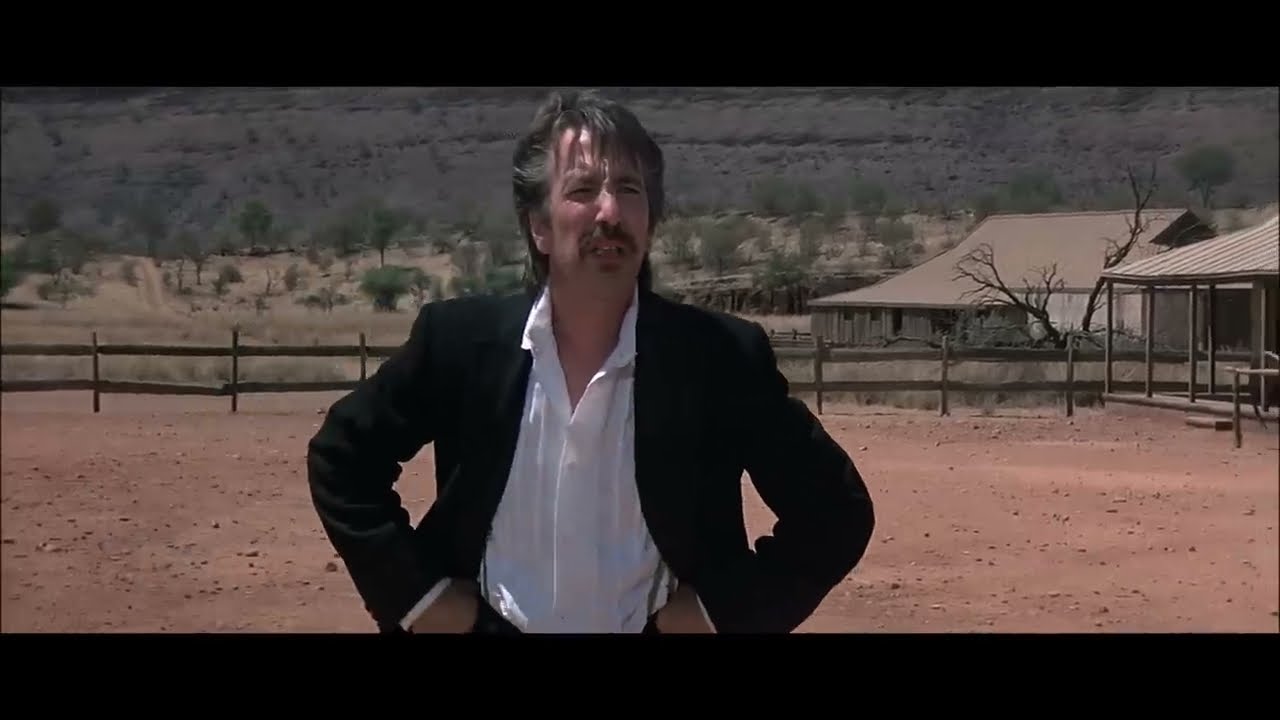
After the duel, he delivers the line that completes the entire setup:
“I said I never had much use for one. Never said I didn’t know how to use it.”
It is one of those perfect Western lines because it explains everything while remaining completely consistent with the character. Quigley never lied. Other people simply heard what they wanted to hear.
Marston believed that disliking revolvers meant being unable to use them.
Quigley never corrected him.
The line transforms the showdown from a simple gunfight into a lesson about arrogance, assumptions, and underestimating the wrong person.
That is why the moment continues to resonate with Western fans.
The film itself is unusual because it takes many familiar elements of American frontier stories and places them in Australia. Instead of the dusty towns commonly associated with classic Westerns, audiences see enormous Australian landscapes, unfamiliar terrain, and a different historical setting. Yet the themes remain recognizable: justice, survival, greed, courage, loyalty, and the consequences of violence.
Quigley feels like a traditional Western hero who has been transported into another frontier.
That makes his rivalry with Marston especially interesting. Marston is obsessed with American gunfighter culture, while Quigley—the actual American—seems far less interested in the mythology surrounding it.
To Marston, being a gunfighter is something glamorous.
To Quigley, a gun is simply a tool.
That difference tells us everything about them.
The final duel also succeeds because the film earns it. If two characters simply met at the end and started shooting, the moment would have far less emotional weight. But the audience has watched the conflict build across the entire story. Quigley has witnessed cruelty, survived attempts on his life, protected people who needed help, and continued moving forward despite overwhelming odds.
When he finally faces Marston directly, the showdown feels inevitable.
The audience does not simply want to see who is faster.
They want to see a moral conflict resolved.
That is the secret behind many great Western confrontations. The guns matter, but the meaning behind them matters more.
The genre has always used duels as a way of turning complex conflicts into simple visual moments. Two men stand opposite each other. One represents one set of values. The other represents something completely different. When the shooting begins, the entire struggle is compressed into seconds.
Quigley Down Under follows that tradition while giving it a clever twist.
Everyone expects the rifleman to be helpless without his rifle.
Instead, he proves that the weapon was never the source of his strength.
Quigley himself was.
There is also something deeply satisfying about watching arrogance collapse instantly. Marston has arranged the situation. He believes he controls the rules. He expects Quigley to participate in a contest designed specifically to favor him.
For a few moments, everything appears to be working exactly as he planned.
Then Quigley draws.
The illusion disappears.
That sudden reversal is why the scene remains so memorable. Audiences love moments when a character who has been underestimated finally reveals what they were capable of all along. It creates a combination of surprise, justice, and emotional release.
The scene does not require complicated choreography or enormous explosions.
It only needs timing.
A stare.
A draw.
A few shots.
And one unforgettable line.
More than three decades after the film’s release, the final confrontation in Quigley Down Under still stands as one of its defining moments. Tom Selleck brings calm authority to Matthew Quigley, while Alan Rickman makes Elliott Marston a villain whose confidence becomes the instrument of his downfall.
The scene reminds us why classic Western storytelling remains powerful.
Sometimes the most dangerous person in the room is not the one making threats.
Sometimes he is the one standing quietly, waiting for everyone else to finish talking.
Marston thought he had finally created the perfect contest.
He thought the rifleman had been stripped of his advantage.
He thought he understood Matthew Quigley.
And in the few seconds that followed, he discovered just how wrong he had been.
That is what makes the showdown more than another movie gunfight.
It is the moment Quigley Down Under reveals the complete truth about its hero.
Matthew Quigley was never dangerous because of one rifle.
He was dangerous because when the moment came, he knew exactly what needed to be done—and he had the skill, nerve, and courage to do it.